 Français
 Deutsch
 English
 Español
 Italiano
Black Tourmaline


Find all our Black Tourmaline products
Stories and legends
The name tourmaline comes from “turmali” or “turamali,” which is actually a Sinhalese name given to this fabulous stone from Sri Lanka by Dutch explorers at the beginning of the 18th century.
In Sri Lanka, a legend says that tourmaline comes from the sky and, as it descended to earth, it passed through a rainbow that gave it its variations of color. This explains the origin of its name, meaning “the stone of a thousand colors.”
In fact, tourmaline has been known for millennia. Traces of this stone can be found as far back as the 3rd century BC. In Greece, it was Alexander the Great (356-323 BC) who brought this stone back from his expeditions. However, because of its many colors, tourmaline has very often been mistaken for other minerals.
As a result, there are very few legends or myths attached to this stone because it was identified so late. However, some tourmalines have piezoelectric properties, which means they have an electric charge, negative at one pole and positive at the other. Tourmaline attracts particles.
When the philosopher Theophrastus (-322 to -288) describes a stone with the ability to attract pieces of straw or wood, we understand that he is talking about tourmaline. Later, in the 18th century, Dutch explorers used tourmaline to clean their pipes, because the stone attracted ash.
As a side note, in the 16th century, a Spanish conquistador discovered a green tourmaline in Brazil, which he identified as an emerald. This discovery sparked a rush into the Brazilian regions in search of these famous emeralds. The mistake was corrected in the 19th century and the emeralds turned into tourmalines.
Often mistaken for precious stones, tourmalines can therefore be found in many jewels, and even in the British crown. We can also mention the Timur Ruby, a 352-carat jewel once believed to be a ruby until 1851, or the Black Prince’s Ruby of 170 carats, which is actually a tourmaline.
Tourmaline is increasingly attracting the interest of connoisseurs and collectors. Thus, the Chinese Empress Cixi (1861-1908) loved this stone so much that she began collecting it. She had sculptures, brooches, watch fobs, rings, etc. made for her. Today, she rests on a cushion of tourmalines.
Tourmaline comes in a variety of shades. It can also be bicolored or multicolored. There is a wide variety of tourmalines, in different colors, from opaque to transparent, with striated or hexagonal structures. It has a rhombohedral crystal system. It is an igneous and metamorphic rock that can come from hydrothermal deposits.
There are several types of tourmaline with varied compositions such as magnesium silicates, sodium, iron, clay, fluorides and borosilicate. Tourmalines are in fact an entire family of stones, with the same internal structure, but differing in chemical composition and therefore in color and appearance.
The main deposits are located in Brazil, Afghanistan, Australia, Brazil, Russia, Thailand, Burma, Madagascar, India, and the United States.
Black Tourmaline
Black tourmaline is the best-known variety of tourmaline. It is also known as schorl. It is said to be black, but it can also be dark brown. It has gained its reputation over time because of its many properties.
So black tourmaline, schorl, is the most common tourmaline and can sometimes measure up to 2 m high. Its composition, very rich in iron, gives it this black, opaque and intense appearance. We can point out that it is the only type of tourmaline with a uniform color.
Thus, schorl, a mineral species of tourmaline, belongs to the silicate group, sub-group of cyclosilicates. The name “schorl” comes from German. It has a vitreous luster, with a conchoidal fracture, and its streak is white. It is a mineral formed in metamorphic rocks, leucogranites and pegmatites.
Like all tourmalines, schorl is composed of a complex silicate of boron, sodium and aluminium and has a hardness of 7 to 7.5 on the Mohs scale. Its crystal system is rhombohedral. Schorl or black tourmaline appears as elongated prismatic crystals, well formed and striated along the length, or as small aggregates of tiny crystals.
Black tourmaline is a very ancient stone, mentioned in many traditions, especially among Brazilians, Egyptians, Greeks and Indians. It is a stone renowned for its protective virtues. It is also a grounding stone used nowadays in lithotherapy and meditation. Because of its piezoelectric properties, black tourmaline is also used in electrochemistry.
The price of black tourmaline remains moderate, because there are many deposits and this stone is still easy to find in stores. Worked into jewelry, its price will be a little higher.
The main deposits are located in Brazil, Madagascar, etc.

The benefits of black tourmaline in lithotherapy
Its benefits on a psychological level
Tourmaline is a very powerful grounding stone. It helps keep you grounded, calms scattered thoughts and refocuses attention. It soothes the mind and irrational fears. It allows you to connect with your inner self, perceive deep needs and identify the cause of certain blockages. These are often traumas linked to childhood. It is an excellent meditation stone that channels the mind’s digressions.
Thus, schorl has strong protective virtues. It is capable of absorbing negative energies released by certain angry, jealous or envious people. It is said to neutralize harmful influences and to be capable of absorbing electromagnetic waves. It is a stone of protection for both people and places. Placing various black tourmalines in the home, or wearing a black tourmaline bracelet, allows the person or the home to be protected. This black stone removes the negative consequences of an unhealthy environment or the waves from household devices (phone, computers, etc.).
Black tourmaline helps deflect bad thoughts, improves concentration, creativity, inspiration and imagination. It is recommended for children or hyperactive people. It helps restore serenity and harmony. The wearer is calmer, less distressed and less anxious. They regain calm and wisdom.
Its benefits on a physical level
A wonderful anti-stress stone, black tourmaline diffuses energy and vitality. It dispels fatigue and gives the desire to spend this energy on resuming physical activity or doing manual work. It relieves nervous tension.
This incredible stone also fights insomnia and provides restorative, high-quality sleep. The person should place a black tourmaline on a bedside table or under the pillow.
It combats electromagnetic pollution.
Black tourmaline and the associated astrological signs
Black tourmaline, a powerful protective stone, spreads its benefits across all zodiac natives. Sometimes it develops a stronger affinity with certain astrological signs. This is the case for the following zodiac signs:

- Cancer: symbol of family, roots and imagination. This sign represents nostalgia, sensitivity and fertility. Wearing black tourmaline helps it regain serenity and harmony, and encourages calm and less anxiety. Indeed, this sign tends to live in stress and worry. It constantly needs reassurance. When it evolves within its family circle, it feels safe. Thus, it can become creative and unleash its imagination. It is a very generous person who likes to share with those around them. They like to be of service and to feel indispensable. Very shy, they build a shield around themselves and can become unpleasant and aggressive. They sometimes have childish reactions and may sulk for hours over trivial matters. Suffering from hypersensitivity, they have a hard time controlling their emotions. They are a workaholic who is loyal, serious and conscientious. In love, they are tender, gentle and sentimental. They are among those who are emotionally dependent. Their partner will need to reassure them constantly. Extremely faithful, they are often possessive and jealous. Very affectionate, they seek gentleness and harmony. They want to start a family quickly, because they are not interested in adventures ;
- Sagittarius: symbol of philosophy, higher education and religion. This sign represents law, esotericism and long journeys. Wearing black tourmaline protects it from negative energies emanating from angry, jealous or envious people. It strengthens its natural authority. This sign is optimistic and often lucky. Friendly, it is cheerful, enthusiastic and naturally brings people together. It has a great talent for putting conflictual situations into perspective. A sign of long journeys, it needs a professional activity that leaves it free to move around. It cannot stand being trapped in an office. Rather honest, it can be highly hypocritical in the workplace. Always at 100%, it hates routine and develops many activities, which it rarely finishes. It tends to get fired up quickly and then becomes impatient and enthusiastic. Very generous, it likes sharing with its circle of friends. It has a great sense of humor, sometimes bordering on irony. Moralizing, it hates being given advice. In love, it loves the game of seduction. It likes to set out in search of new prey. Paradoxical, it dreams of finding its soulmate while behaving like a libertine. It is not necessarily in favor of marriage, because it loves its freedom too much ;
- Capricorn: symbol of ambition, perseverance and solitude. This sign represents austerity, patience and method. Wearing black tourmaline helps keep you grounded, calms scattered thoughts, refocuses attention while soothing the mind. This sign is organized and is often associated with knowledge and expertise. Very young, it knows exactly what it wants to do with its life. A hardworking person, it will do everything to achieve its goals. It often comes across as very serious, even too sensible. It has a very hard time trusting others and opening up. Extremely patient, it never acts on impulse. Its actions are always well thought out. It needs to succeed socially and professionally. It is a loner who is self-sufficient. It has very few friends and can be mentally rigid. It likes acquiring movable and immovable property. It takes time for it to realize its own worth. In love, it suffers from pathological shyness and many complexes. It cannot let itself go and does not trust easily. Full of doubts, it would rather give up on a beautiful love story than risk being rejected. Over the years, it learns to trust and then reveals itself to be tender and passionate.
Black tourmaline and the chakras
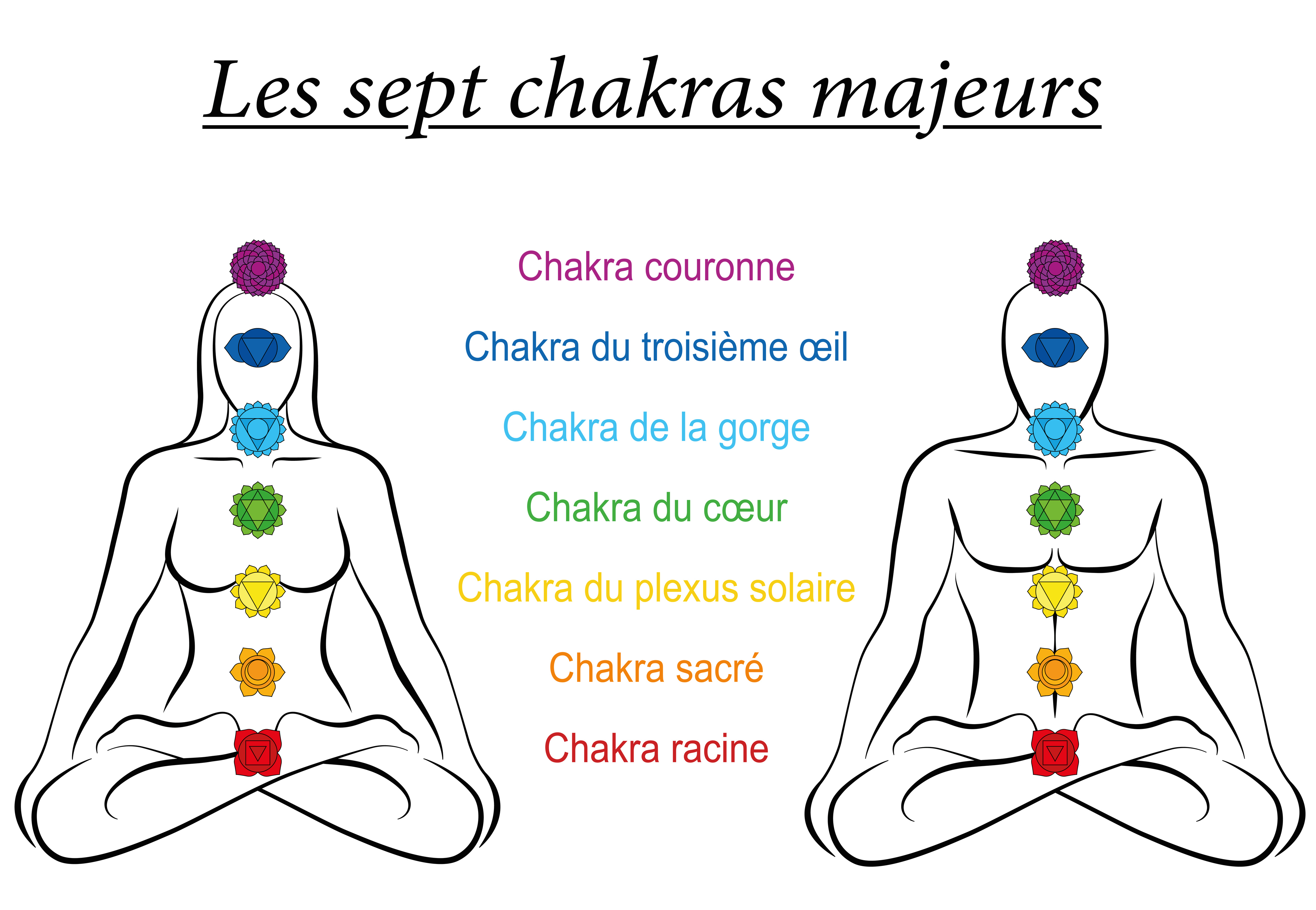
Black tourmaline helps balance the root chakra. This chakra is located at the base of the spine, at the perineum. A balanced root chakra makes a person confident and self-assured. They have great energy.
An imbalanced, overactive root chakra makes a person closed off to the pleasures of the senses. They become authoritarian, selfish, and sometimes even violent. They suffer from hyperactivity and are excessive in everything they do. They may fall into addictions. They are obsessed with accumulating material or real estate wealth.
An imbalanced, blocked root chakra causes a malfunction that leads the person to lose their bearings. They suffer from various fears: not having enough money, losing their job. They show a tremendous lack of self-confidence. They no longer have any interest in sexual relations.
Care, cleansing and recharging of black tourmaline
From the moment it is extracted until it reaches your home, your black tourmaline cannot be cleansed or recharged using the elements around it, such as water, rain, earth and sun. Handled many times, it has inevitably come into contact with more or less negative influences. As soon as it arrives in your home, it is essential to cleanse your black tourmaline. The following operations should be carried out for maintenance at least once a month or after a lithotherapy session.
Place your black tourmaline in a glass of spring water for 2 hours. Dry it gently with a soft cloth. For a lighter cleansing, opt for white sage fumigation or use a Tibetan singing bowl.
Recharge your black tourmaline in full afternoon sun for 2 hours. You can also place it in an amethyst geode or on a quartz cluster for 24 hours.