 Français
 Deutsch
 English
 Español
 Italiano
Brown Tourmaline

Find all our products in Brown Tourmaline
Stories and legends
The name tourmaline comes from “turmali” or “turamali”, which was in fact a Sinhalese name given to this fabulous stone from Sri Lanka by Dutch explorers at the beginning of the 18th century.
In Sri Lanka, a legend says that tourmaline comes from the sky and, as it descended to Earth, it crossed a rainbow that gave it its variations of colour. This explains the origin of its name, meaning “the stone of a thousand colours”.
In fact, tourmaline has been known for thousands of years. Traces of this stone can be found as far back as the 3rd century BC. In Greece, it was Alexander the Great (356-323 BC) who brought this stone back from his expeditions. However, tourmaline, because of its many colours, was very often confused with other minerals.
As a result, there are very few legends or myths attached to this stone because it was identified so late. However, some tourmalines have piezoelectric properties, which means they have an electric charge, negative at one pole and positive at the other pole. Tourmaline attracts particles to itself.
When the philosopher Theophrastus (-322 to -288) describes a stone with the ability to attract straw or pieces of wood to itself, we can understand that he is talking about tourmaline. Later, during the 18th century, Dutch explorers used tourmaline to clean their pipes, because the stone attracted ashes.
As an anecdote, in the 16th century, a Spanish conquistador discovered a green tourmaline in Brazil, which he identified as an emerald. This discovery triggered a rush through the Brazilian regions in search of these famous emeralds. The mistake was corrected in the 19th century and the emeralds turned out to be tourmalines.
Mistaken many times for precious stones, tourmalines can therefore be found in many pieces of jewellery, and even in the British Crown Jewels. We can also mention the Timur Ruby, a 352-carat jewel once thought to be a ruby until 1851, or the Black Prince's Ruby of 170 carats, which is in fact a tourmaline.
Tourmaline is arousing more and more enthusiasm among connoisseurs and collectors. Thus, the Empress of China Cixi (1861-1908) loved this stone so much that she began collecting it. She asked for sculptures, brooches, watch fobs, rings, etc. to be made for her. Today, she rests on a cushion of tourmalines.
Tourmaline comes in a variety of shades. They can also be bicoloured or multicoloured. There is a wide variety of tourmalines, in different colours, from opaque to transparent, with striated or hexagonal structures. It has a rhombohedral crystal system. It is an igneous and metamorphic rock that can come from hydrothermal deposits.
Thus, there are several kinds of tourmaline with varied compositions such as magnesium, sodium, iron, clay, fluoride and borosilicate silicates. Tourmalines are in fact an entire family of stones, which share the same internal structure but differ in chemical composition and therefore in colour and appearance.
The main deposits are located in Brazil, Afghanistan, Australia, Brazil, Russia, Thailand, Burma, Madagascar, India and the United States.
Brown tourmaline or dravite
Brown tourmaline or dravite is a variety of tourmaline that is brown or mahogany in colour, sometimes so dark that it is mistaken for black tourmaline. It is a mineral from the cyclosilicate family, a sodium, aluminium and magnesium hydroxylate.
In addition to the elements in its formula, brown tourmaline may contain impurities of iron, manganese, titanium, calcium, chromium, vanadium, potassium and fluorine. It is especially appreciated for its high magnesium content.
This mineral is mainly found in crystalline limestone rocks or dolomites, or even in mafic igneous rocks (for reference: mafic: said of a rock or mineral rich in iron and magnesium).
Discovered in 1883 in Slovenia, brown tourmaline is also called dravite because of the river where it was found in abundance. This river is called the Drava and is located in Slovenia and Austria.
Brown tourmaline stands out for its transparent appearance. It has a rhombohedral crystal system and a hardness of 7 to 7.5 on the Mohs scale. By comparison, diamond has the highest hardness, 10 on the same scale.
The main deposits are located in Brazil, etc.

The benefits of brown tourmaline in lithotherapy
Its benefits on the mental level
Brown tourmaline helps overcome life’s difficulties and gives the courage to accept the unthinkable. It makes it possible to make peace with the past and identify the source of certain blockages often linked to childhood. The emotional wounds of past experiences are transformed into gentle healing.
A grounding stone, brown tourmaline gives a sense of responsibility and full awareness of reality. It offers its wearer the chance to fully enjoy life and the present moment, without worrying about either the past or the future. It inspires a more stable, orderly and structured life.
This stone encourages sociability: the wearer of brown tourmaline opens up to others more easily. They show more empathy, compassion and understanding. They learn to trust others and to flourish socially. This stone is recommended for people suffering from social adjustment problems.
Moreover, brown tourmaline is known for stimulating creativity. It is perfect for artists or for those who love to create. It is said to free the mind and the imagination. It also increases memory abilities.
It is also a stone of protection against negative energies such as anger, resentment and hatred. It keeps harmful people away from the brown tourmaline wearer’s environment.
Its benefits on the physical level
Brown tourmaline is a stone rich in magnesium. It helps its wearer better absorb it.
Brown tourmaline is also recommended in the fight against addictions or bad habits. It gives the strength to resist and fight harmful urges. Wearing tourmaline strengthens the mind.
This stone supports good circulation of bodily fluids.
Brown tourmaline and the zodiac signs
Brown tourmaline has many virtues and abilities that act on all zodiac natives. However, this stone sometimes develops more pronounced affinities with certain astrological signs. This is especially true for the following zodiac signs:

- Aries : symbol of enthusiasm, ardour and impulse. This sign represents dynamism, momentum and energy. Wearing brown tourmaline strengthens its sense of responsibility, gives it full awareness of reality, and allows it to fully enjoy life. This sign radiates contagious energy. It is bold and assertive. Ambitious, it seeks combativeness and wants to be first. It aims for success and gets back up even after failure. Sometimes immature, it tends to get angry over trifles. Very outspoken, it can be harsh and offend the person it is speaking to. It is seriously lacking in diplomacy. However, it has a lot of charisma and its company is highly sought after. Very spendthrift, it will work hard to achieve the professional success that will secure its lifestyle. It likes to invest itself fully in its projects, which it does not always carry through to the end. It is not resentful; it reacts in the moment, then moves on. In love, it reveals a passionate side and often falls quickly. It likes to set out to win the other person over. Its goal is above all to seduce. It needs to live an exhilarating relationship. Routine will drive it away;
- Virgo : symbol of organisation, logic and perfection. This sign represents work, method and science. Wearing brown tourmaline helps it overcome life’s difficulties and allows it to make peace with its past. This sign is often anxious, stressed and very shy. It hides behind a mask of coldness. It is very fussy and obsessed with cleanliness. It has an extreme level of self-demand and demands the same of others. Highly organised, it aims for perfection. It often has a great deal of talent and technical skill, which it puts at the service of others. However, it suffers from a serious lack of confidence and finds itself relegated to the background. It tends to irritate those around it with its constant criticism. Devoted, it does not hesitate to sacrifice itself for others. It is also a real workaholic. It loves to make itself indispensable. In love, it is self-conscious, modest and shy. It would rather miss out on a beautiful story than suffer rejection. It is neither sentimental nor romantic and if it marries, it will be out of reason and not love;
- Scorpio : symbol of death, instinct and desire. This sign represents mystery, destruction and sexuality. Wearing brown tourmaline teaches it to trust others and to flourish socially. This sign is secretive, mysterious and does not open up easily. It remains enigmatic and reserved. Sometimes extreme, it can be tyrannical, violent and sadistic. It likes to live experiences that are sometimes forbidden. Its overpowered instinct enables it to detect all the weaknesses of the person it is speaking to. It may even go as far as manipulation. It has a taste for success and can be formidable. Very demanding of others, it is loyal and wholehearted. On the other hand, it does not know how to forgive and if it is betrayed, its revenge will be formidable. However, beneath its complex exterior, it hides a loving and affectionate nature. It has a great sense of humour, but it cannot stand being made fun of. In love, it needs to possess the other person. It seeks to merge with its partner. It is passionate and terribly jealous. It likes to transgress morality. Over the years, it calms down and becomes an excellent partner.
Brown tourmaline and chakras
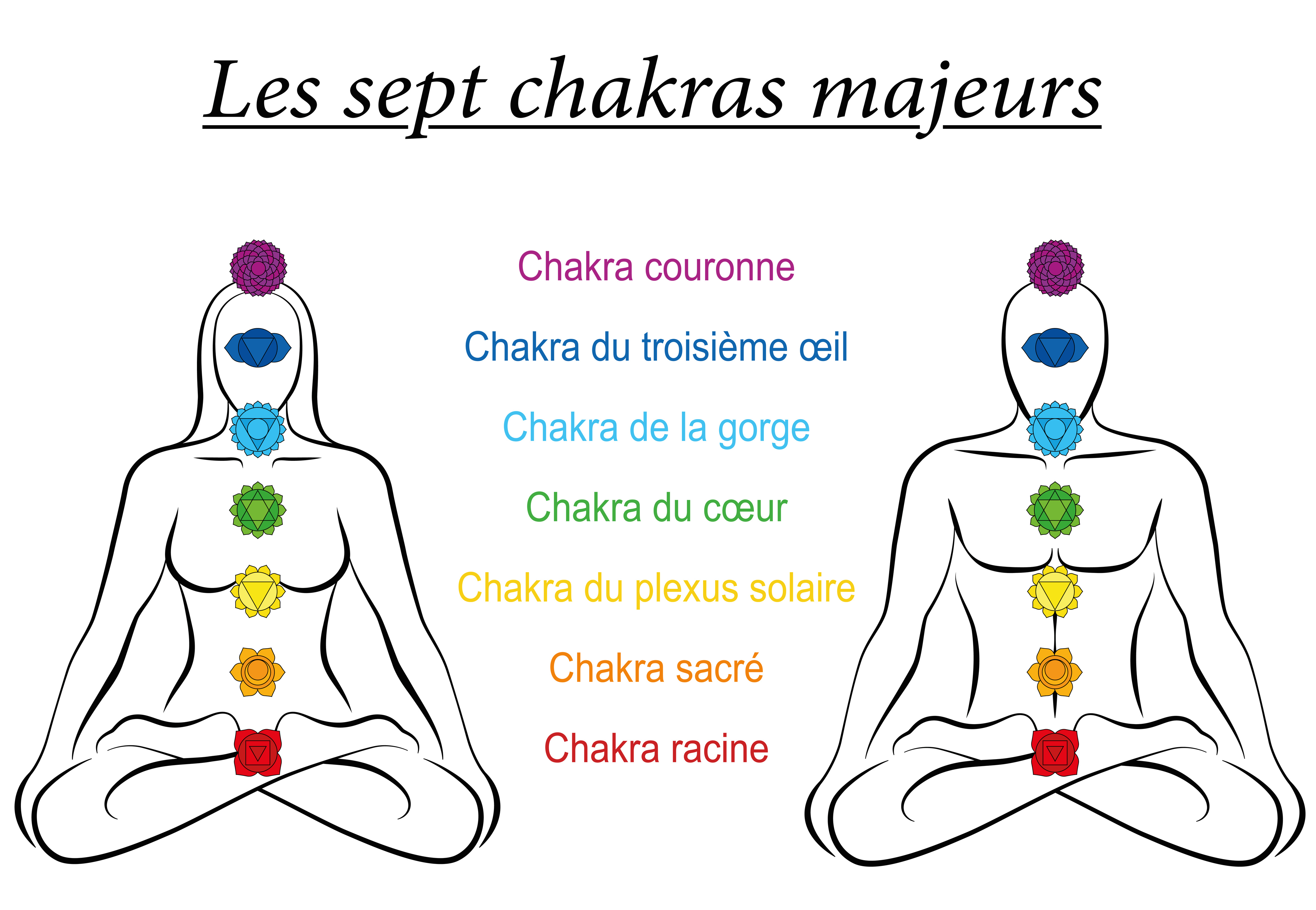
Brown tourmaline helps balance the root chakra. This chakra is located in the perineum, at the base of the spine. The root chakra points downward.
A balanced root chakra provides a feeling of security and well-being. The person feels good in their head. They have self-confidence and feel vitality and energy.
An imbalanced root chakra, when too open, makes the person impermeable to the outside world. They no longer feel any physical pleasure. They can become hyperactive and fall into all kinds of excess. They thus succumb to various addictions.
An imbalanced root chakra, when closed, is then in full dysfunction. The person is no longer grounded. They develop significant stress and are always afraid of being abandoned. They no longer have any sense of reality and are unstable. They lose self-confidence and no longer have any interest in sexuality.
The care, cleansing and recharging of brown tourmaline
From the moment it is extracted until it reaches your home, your brown tourmaline cannot be cleansed or recharged using the elements around it such as earth, sun or water. Handled many times, it will inevitably have come into contact with all kinds of influences, both positive and negative. It may even have lost some of its effectiveness.
As soon as it arrives in your home, you should cleanse and then recharge your brown tourmaline. The following steps should be carried out at least once a month or after a lithotherapy session.
Immerse your brown tourmaline in a glass of spring water for 2 hours. Dry it very carefully. Avoid any direct contact with salt. For a gentler cleansing, opt for white sage smudging or a Tibetan singing bowl.
Recharge your brown tourmaline by placing it in the rays of the full moon or put it in an amethyst geode or on a quartz cluster for 24 hours.