 Français
 Deutsch
 English
 Español
 Italiano
Apache Tear Obsidian

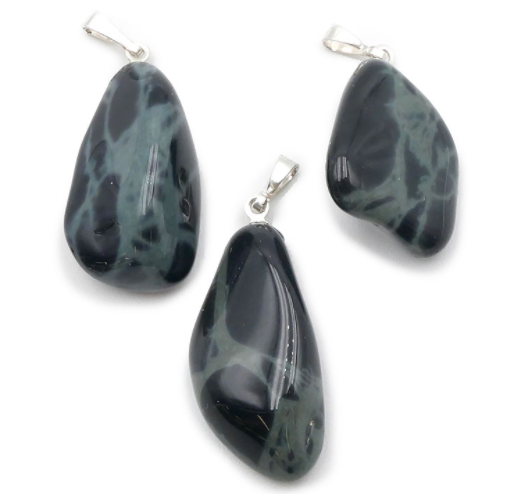
Find our pendants and Apache Tear Obsidian stones
Apache Tear Obsidian
Obsidian is a volcanic rock rich in silica. Different types of obsidian exist. They differ because of the chemical composition of the rock. Obsidian is actually a natural glass. It forms during an eruption of silica-rich lava with less than 3% water. As it exits the volcano, it cools very quickly, freezing the crystallization process.
This can be compared to a piece of lava suddenly frozen as it leaves the volcano. The direct consequence of this phenomenon is that the rock cannot crystallize. The result is the creation of a volcanic glass with a uniform texture, known as an amorphous mineral. In addition, obsidian has sharp edges and very fine blades. It is a natural mineral with a complex composition.
Thus, obsidian is composed mainly of silicon dioxide, around 70%, or even more. Its fracture is conchoidal (that is, marked by curved, concentric striations) and its hardness is 5 to 5.5 on the Mohs scale. It comes in different colors and different reflections because of the volcano where it was discovered and its various inclusions. It should be noted that each deposit, linked to a volcano, yields a different obsidian.
Green, brown, gray or black, it can sometimes have golden or silvery reflections, or even all the colors of the rainbow (an effect produced by the presence of hematite or magnesite). Sometimes two colors of obsidian mix together.
Stories and legends
Traces of obsidian can be found in certain sharp-edged objects dating back around 2 to 4 million years, particularly in Kenya. During archaeological excavations, knives, arrows and spears have been discovered. Sometimes, depending on its composition, obsidian can be polished to make rustic mirrors.
As early as 7,000 BC, obsidian was widely used in surgery because of its cutting properties. Traces of trepanation, the removal of part of the skull bone, can be found either to clean a wound or to let spirits enter.
In Mesopotamia, traces of obsidian blades have been identified as early as 5,000 BC.
In Egypt, obsidian was brought back from the Red Sea, Greece or Italy. The Egyptians used it for its beauty, mystery and value. They made the eyes of their statues with it, notably those in Tutankhamun's mask (1323 BC). Obsius, returning from Ethiopia, brought back obsidian and decided to give it its name, obsidianus in Latin. Obsidian was used to make all kinds of decorative objects, jewellery and tools.
However, in Mexico there is another legend. At a time when the indigenous people lacked food, the men went off hunting where they had to face wild beasts, even mammoths. They left women and children under the protection of the elders. Then one day, the tribe was attacked by wild and fierce hyenas. But the elders no longer had any weapons when young Obsid, the son of the bravest warrior, saw a shiny black stone on the ground. He firmly tied it to a piece of wood. He threw this makeshift weapon at one of the hyenas, which howled in pain, causing all the others to flee. The whole tribe honored young Obsid and granted him warrior status, and the stone was thus named after him.
Among the Navajo tribe, obsidian was one of the 4 sacred stones. The mountain of obsidian corresponds to Mount Hesperus. In some stories of their creation, the human heart would have been created by the gods with obsidian.
For generations, magicians, sorcerers or prophets have used polished obsidian as a mirror. They claimed they could read the future in it. But it was Dr John Dee (1527 - 1608) who used it again to spread his prophecies. He became very famous and history says that he may have helped thwart certain plots against the English crown.
Apache Tear obsidian deposits
The main obsidian deposits are located in Mexico, Madagascar, the United States, etc.

The properties of Apache Tear obsidian
Apache Tear obsidian is a stone found in southern Arizona. According to an Indian legend, the Apache people tried to make peace with the white man. One day, a group of 70 of them left their tribe and decided to go and sign a peace treaty. They were ambushed by soldiers.
Fifty of the seventy men were shot dead. The twenty men still alive took refuge at the top of a mountain. They chose to jump into the void rather than be killed by the white man's hand.
When the news reached the rest of the tribe, made up mainly of women, children and elders, they began to cry in pain. The families of the brave men who were killed shed huge tears that fell to the ground.
These families were so grief-stricken that the Great Spirit decided to turn their tears into small black stones. Legend says that whoever carries an Apache Tear obsidian will no longer cry.
In reality, these are small drops of volcanic glass. They are often trapped in gray perlite (a volcanic rock that contains water). This presence of water during cooling causes the obsidian to hydrate. The water that penetrates the glass turns into perlite. When the perlite is not completely filled with water, pockets of obsidian remain in the form of Apache Tear pebbles.
This obsidian looks opaque but, when exposed to light, its transparency becomes visible. It then looks like smoky quartz. It is said that this stone, when exposed to light, reveals the transparent tears of Apache women.
Apache Tear obsidian is black or dark gray in color with small white inclusions. It is also nicknamed "smoky obsidian". It is said to bring good luck to the person who wears it.
The main deposits are located in Mexico or the United States.
The benefits of Apache Tear obsidian in lithotherapy
Its benefits on the mental level
Apache Tear obsidian is particularly recommended for people who have just experienced a tragedy, such as the loss of a loved one, a breakup, or an unfair dismissal. It helps release deep sorrow and allows the acceptance of states of suffering. It is a stone of consolation and release.
Native Americans use this stone for good luck and to protect them from dark forces. Apache Tear obsidian acts like armor against negative energies, harmful influences and bad vibes.
This stone helps one think objectively and control one's feelings and passions. It fosters compassion and forgiveness in order to preserve balance. It helps you live in the present moment and frees you from blocks linked to the past. It encourages letting go of resentment, grudges and anger.
During self-exploration work, it brings negative feelings to the surface, feelings that are at the origin of psychological blocks. By helping people understand them, it frees those who have difficulty letting go of the past. It also removes feelings of inferiority or lack of self-confidence.
When there are problems in a couple, Apache Tear obsidian helps maintain balance in times of difficulty or crisis. It encourages letting go and makes it possible to stop trying to control everything. It encourages quality communication.
Its benefits on the physical level
This stone effectively combats states of intense sadness. It restores the desire to enjoy life and especially the present moment. It encourages physical activity. This activity is important for the body's balance.
It is known to promote the assimilation of vitamin B and vitamin E. These vitamins are essential for good health.
Apache Tear obsidian and the associated astrological signs
Apache Tear obsidian is like all obsidians: it has strong protective and healing powers for all zodiac natives. However, special connections are formed with the following astrological signs:

-
Cancer : symbol of family, origins and imagination. This sign represents sensitivity, nostalgia and fertility. Wearing Apache Tear obsidian provides protection against negative energies. Suffering from hypersensitivity, this sign is afraid of abandonment. It constantly needs reassurance. Highly creative, it can only unleash its imagination when it feels safe, surrounded by its loved ones. This sign likes to take care of others; it shows great kindness and empathy. Very shy, it builds up armor and can be aggressive and unpleasant. This sign has a lot of intuition. It can get angry over trifles and then sulk. It is always up to the other person to take the first step. It is also very resentful and does not forgive. It is a workaholic, where it is serious, loyal and conscientious. It is often nostalgic for its childhood and can be hypersensitive. It has trouble managing its emotions. In love, it needs tenderness and is very sentimental. It is said to be emotionally dependent. Its partner must reassure and protect it. It is very faithful, possessive and jealous. It has a lot of sensuality and makes an excellent parent;
-
Sagittarius : symbol of spiritual evolution, religion and philosophy. This sign represents higher education, esotericism and travel. Wearing Apache Tear obsidian encourages it to move away from resentment, grudges and anger. This sign is cheerful, enthusiastic and joyful. Its company is appreciated. It is known to bring good luck. People gladly follow it. With it, anything becomes possible. It loves to go off and discover faraway countries. This sign cannot work locked away in an office. It needs space and freedom. It lives life to the fullest, has a great sense of humor and is very generous. It hates routine and may take on multiple projects without necessarily seeing them through to the end. It can sometimes be provocative, even insolent. It says frankly what it thinks. But it can also be very hypocritical if its interests are at stake. In love, it often goes in pursuit of a partner. It is searching for its soulmate, but behaves like a Don Juan. It likes to try all kinds of sexual experiences. Maturity allows it to marry and start a family;
-
Capricorn : symbol of maturity, patience and perseverance. This sign represents social advancement, solitude and responsibilities. Wearing Apache Tear obsidian helps it manage its feelings of inferiority and lack of self-confidence. This sign is very stubborn and does everything to achieve its goals. It does not count the hours it works and eventually succeeds professionally. It likes solitude and is self-sufficient. It is an organized, methodical and trustworthy person. It is often associated with knowledge and expertise. It has a great deal of difficulty trusting. It is too serious, even too reasonable. It may seem rigid, but that is a shell it uses to protect itself. It has very few friends. It is extremely reliable and can be counted on. It is tenacious and eventually gets what it wants. In love, it is far too shy and insecure. It may even miss out on a relationship just to avoid suffering. It is very afraid of commitment. With the years, it learns to trust. It can then reveal itself, becoming tender and passionate. It likes the idea of marriage and family.
Apache Tear obsidian and chakras
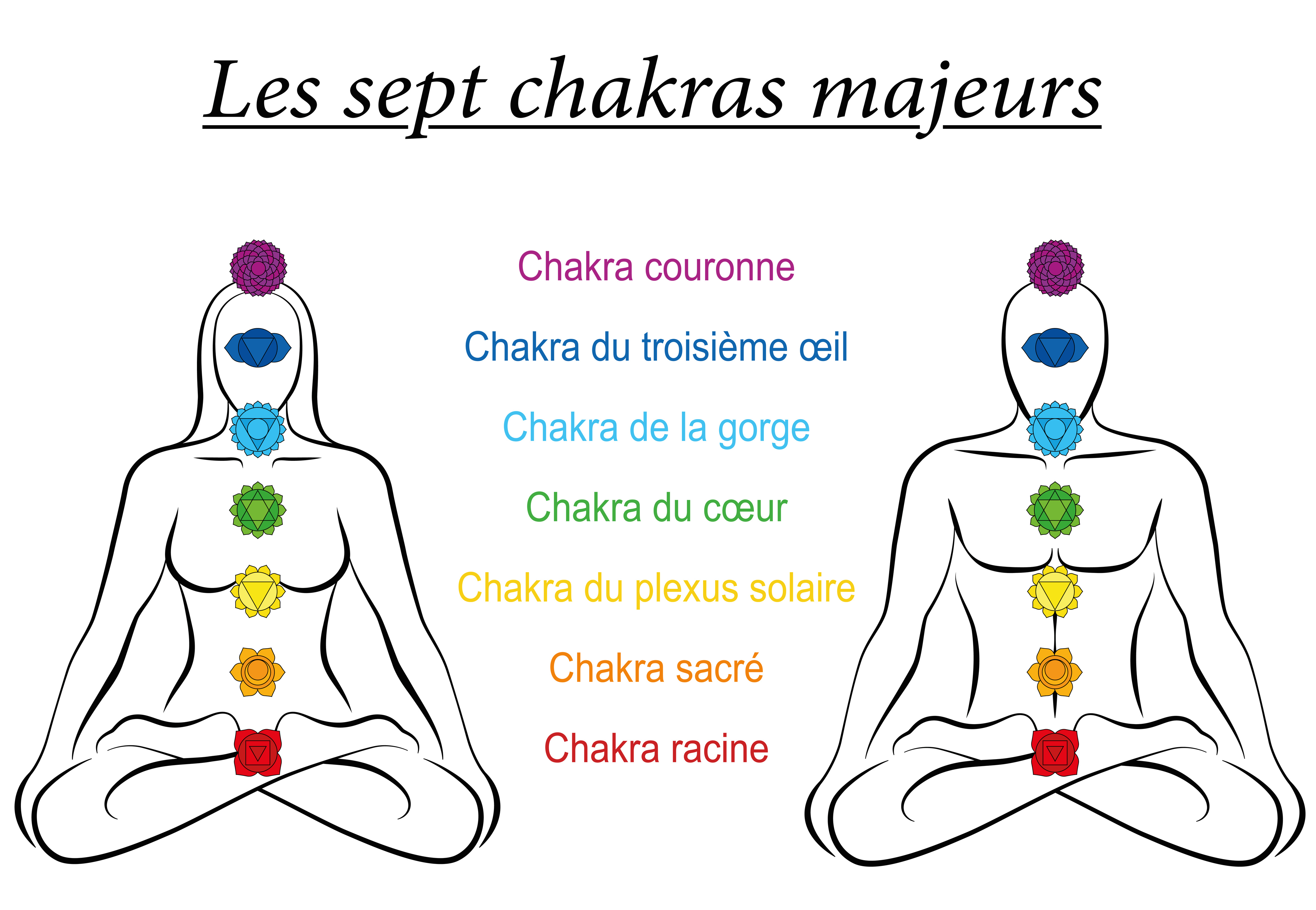
Apache Tear obsidian can help balance the third eye chakra. It is located between the eyes, at the beginning of the bridge of the nose. When this third eye chakra is balanced, it allows one to achieve wisdom, insight and knowledge. The person shows intelligence and has an excellent ability to synthesize and analyze. They see things clearly and with lucidity. They often find solutions to the problems they encounter.
An imbalanced, overactive third eye chakra plunges the person into excessive mysticism. They reject reality and are convinced they possess the truth. It becomes impossible for them to have normal relationships.
A blocked, imbalanced third eye chakra shuts the person off from all spiritual truths. The person no longer seeks to acquire knowledge. They sorely lack intuition.
Care, cleansing and recharging of Apache Tear obsidian
Before your Apache Tear obsidian arrives in your home, it has encountered many influences, negative or positive. It is therefore essential to cleanse and recharge it before use. The following operations should also be carried out once a month for maintenance or after a lithotherapy session.
Run your Apache Tear obsidian under running water for a few seconds. Dry it with a soft cloth. You can also cleanse it with white sage smudging or in a Tibetan singing bowl.
Recharge your Apache Tear obsidian in sunlight for about 2 hours in the afternoon. You can also place it in an amethyst geode or on a quartz cluster for 24 hours.