 Français
 Deutsch
 English
 Español
 Italiano
Malachite

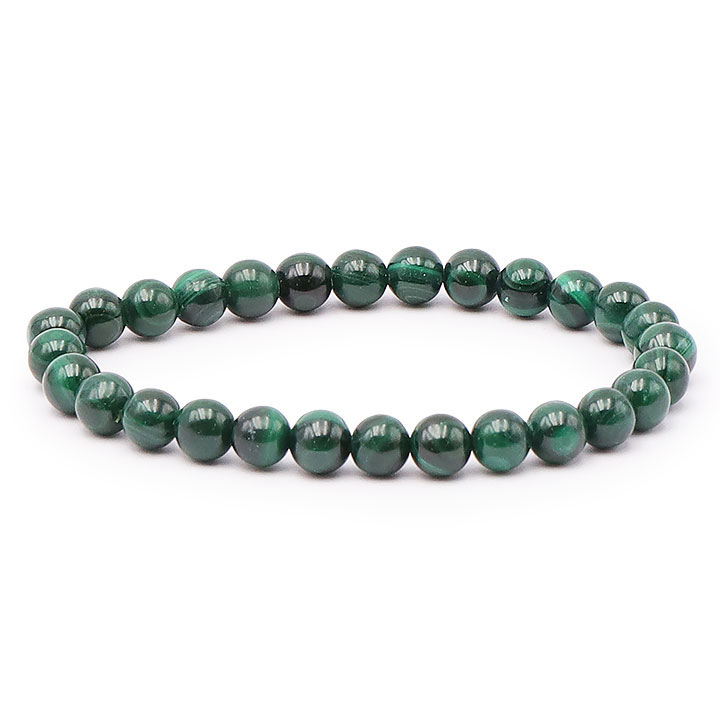
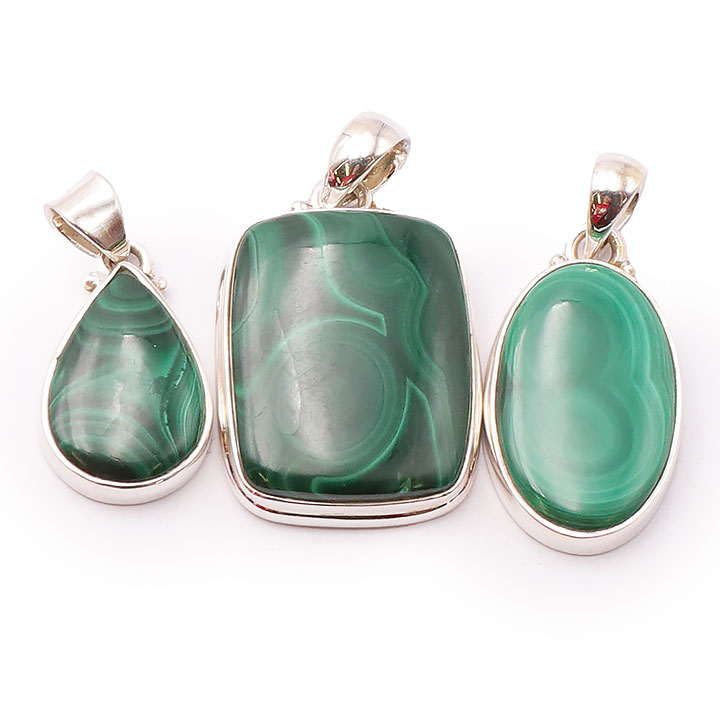
Discover our Malachite stones and bracelets
Malachite
The name malachite comes from the ancient Greek “malaikhé,” which translates as “mallow.” This is not the name of the color mauve, but of the plant called “mallow” (a plant with beautiful, relatively soft green leaves).
Another theory suggests that the origin of the name malachite comes from the Greek “Malachos,” meaning “soft,” in reference to the stone’s tenderness. This is often the interpretation that is retained.
Malachite belongs to the large family of carbonates. This stone is in fact a true hydrated copper carbonate. It has a hardness of 4 on the Mohs scale, which makes it a soft stone. Working it in jewelry requires skill so as not to break or scratch it.
This stone is easy to recognize thanks to its green color, ranging from dark to light, speckled with light veins, or on the contrary black ones. Its green color results from the presence of copper. More rarely, malachite sometimes takes the form of prismatic crystals.
Stories and legends of green malachite
Unlike many stones, malachite has many stories, legends and myths to its name. The first uses of malachite date back to at least 4,000 BC. It can be said that its history goes back to the dawn of time. For thousands of years, malachite has been used by many civilizations for therapeutic, medicinal, cosmetic and decorative purposes.
In ancient Egypt, this venerable green stone was a symbol of rebirth, eternal youth and good health. For the Egyptians, death was the sign of a new life. They even named the afterlife as the domain of malachite.
Egyptian women wore malachite as an amulet bearing the likeness of Taueret, the protective goddess of motherhood. In everyday life, malachite was ground up and used as a cosmetic (eyeshadow), while also being renowned for relieving eye infections.
The ancient Greeks considered malachite a protective stone with many medicinal virtues. Warriors wore it as an amulet in battle. The Greeks also discovered the delicate and meticulous engraving of malachite cameos. Later, malachite was widely used in the creation of facade ornaments, salons and corridors. The Temple of Artemis in Ephesus, one of the seven wonders of the world, was decorated with malachite.
In Roman civilization, malachite was often confused with chrysocolla. However, Pliny the Elder (23 AD - 79 AD), a famous naturalist, described it perfectly in his Natural History encyclopedia. The Romans gave children malachite in the form of pendants to protect them from lightning during thunderstorms.
During the Middle Ages, malachite was attributed curious abilities, including the ability to understand animals! However, Jean de Mandeville (early 14th century - 1372), a famous explorer, described malachite and ascribed to it the same virtues: protection of children against evil spells, against injuries from enemies and against certain illnesses.
At that time, malachite, imported from the Near East, was ground into powder and then used to tint icons, wall frescoes and illuminated manuscripts green.
Today, many malachite creations can be seen around the world. In the United States, in 1819, the French sculptor Pierre-Philippe Thomire created the bronze ornamentation of the Demidof Vase with malachite veneer, standing 1.71 m tall.
In France, there is even a malachite room at the Grand Trianon Palace in Versailles. Most of the ornamental malachite objects seen in museums and castles come from Russian malachite deposits, notably those of the Ural mines.
The origins of rough malachite
The main deposits are located in Congo, Australia, Canada, Germany, Mexico, etc.

The benefits of malachite in lithotherapy
Its benefits on the mental level
Malachite, through its green color, restores energy and vitality. In spring, nature reveals all shades of green, from light green to dark green. Spring symbolizes renewal. This green color of malachite brings hope and serenity. It helps fight stress and anxiety.
Wearing malachite gives vitality and energy. It makes you want to have projects and see them through. It helps overcome life’s difficulties. This stone is a true moral support.
It encourages change and improves relationships with others. It helps one open up to others, strengthening compassion and empathy. The person shows attentiveness and understanding. Conversations and relationships are of high quality.
Malachite improves persuasive power by encouraging clear, concise and structured speech. It also helps develop self-confidence and self-esteem. This stone radiates powerful positive waves.
Placed in a bedroom, it helps drive away dark thoughts and promotes restorative, soothing sleep. It effectively combats periods of intense sadness.
Its benefits on the physical level
Malachite helps release emotional and affective blockages buried by our psyche throughout our lives. In this way, anguish, fears and anxieties are overcome and cleared away.
Malachite restores the desire to drink plenty of water throughout the day. This promotes elimination and the proper functioning of the solar plexus chakra.
Malachite is known to support proper circulation of bodily fluids. It is also said to be effective against motion sickness.
Malachite and astrological signs
Malachite has powerful regenerating virtues for all zodiac natives. However, some astrological signs are more receptive than others. This is the case for the following signs:

-
Taurus: symbol of earth, fertility and stubbornness. This sign represents loyalty, possessiveness and tenacity. Wearing malachite gives it well-being and serenity. This sign is reliable and realistic. It is very tenacious and it is almost impossible to make it change its mind. It is materialistic, likes to own land and real estate. It shows great generosity toward those around it. It is associated with abundance and luxury. It likes parties and pleasures. It has strong opinions. Very balanced, it knows exactly what it wants in life. It is said to be loyal and honest, and its word is gold. In love, it is very tactile and likes to caress. Its sensuality makes it an excellent lover. It is looking for the love of its life. Once it has found it, it is very faithful and quickly wants to start a family ;
-
Scorpio: symbol of death, transformation and instinct. This sign represents mystery, sexual desire and passion. Wearing malachite strengthens its listening skills and understanding of others. It has the ability to psychologically size up its interlocutor and can even go as far as manipulation. It has a taste for success and is a formidable opponent. Nothing and no one resists it. It can become sadistic, show violence and tyranny. It does not forgive betrayals and its revenge is terrible. It is mysterious and difficult to read. It hides its affectionate and tender nature beneath a rather cold exterior. Determined, it always finishes what it starts. In the event of disagreement, it is better to give up, because it gives in to nothing. In love, it is passionate and magnetic. It hypnotizes its prey. It needs to possess them completely. It seeks to merge with its partner. Once all experiences have been fulfilled, it settles down and looks for the love of its life ;
-
Capricorn: symbol of ambition, willpower and perseverance. This sign represents maturity, wisdom and social ascent. Wearing malachite helps soothe it and fight negative emotions. This sign is organized and very methodical. It shows maturity relatively early. It knows exactly what it wants to do in life and does everything possible to achieve its goals. It is a hard worker and does not count the hours spent satisfying its superiors. It needs professional recognition. It is very secretive and does not reveal itself easily. It can sometimes be described as rigid and obsessive. But beneath its mask of coldness, it hides its hypersensitivity. In love, it is very self-conscious and does not trust. It cannot let itself go. It feels uncomfortable with displays of affection. Sometimes it gives up certain relationships to avoid suffering. Over the years, it gains confidence and can finally consider building a lasting relationship.
Malachite for which chakras?
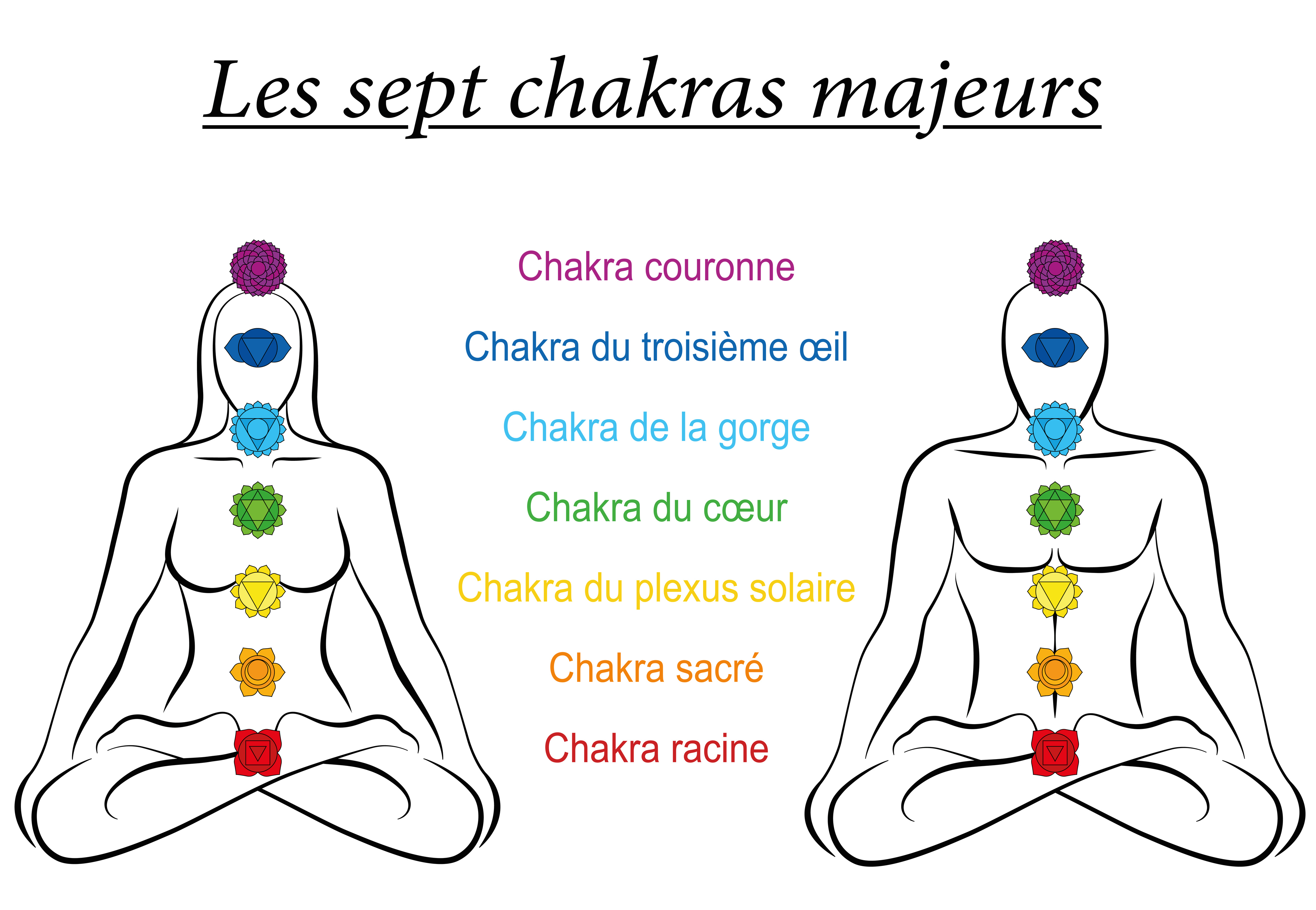
Malachite helps balance the throat chakra. This chakra is located on the seventh cervical vertebra. A balanced throat chakra provides good articulation and a harmonious voice. Speech is clear, precise and easy to understand. The person communicates very well with those around them. They listen to others with great empathy and compassion. They are very serene.
An imbalanced, overactive throat chakra causes lack of self-confidence. The person is sarcastic and overwhelms those around them with a stream of words. Their speech is incomprehensible. They may become aggressive and mean.
A blocked throat chakra stops expression and creates a fear of being judged. The person prefers to stay silent. If they do speak, they may be rude and vulgar. They are shy, self-conscious and nervous. They tend to stammer.
Recharging malachite
In its natural environment, malachite purifies and recharges itself with the help of the elements around it. But since it has been extracted, it can no longer do so. So, as soon as it arrives in your home, carry out the following steps. Repeat these actions to maintain your stone about once a month.
Avoid putting your stone in contact with water or salt. Purify it either by white sage smudging, in a Tibetan singing bowl, or with the technique of burying it in the earth for about a week.
Recharge it in moonlight (avoid full moon days and sunlight). You can also place it on a quartz cluster or on an amethyst geode for 24 hours.