 Français
 Deutsch
 English
 Español
 Italiano
Heated Citrine (Heated Amethyst)
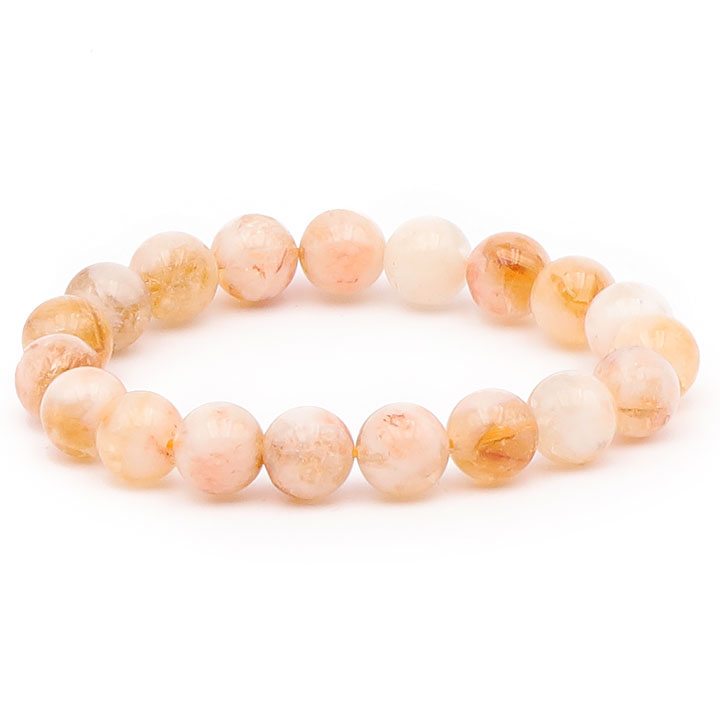
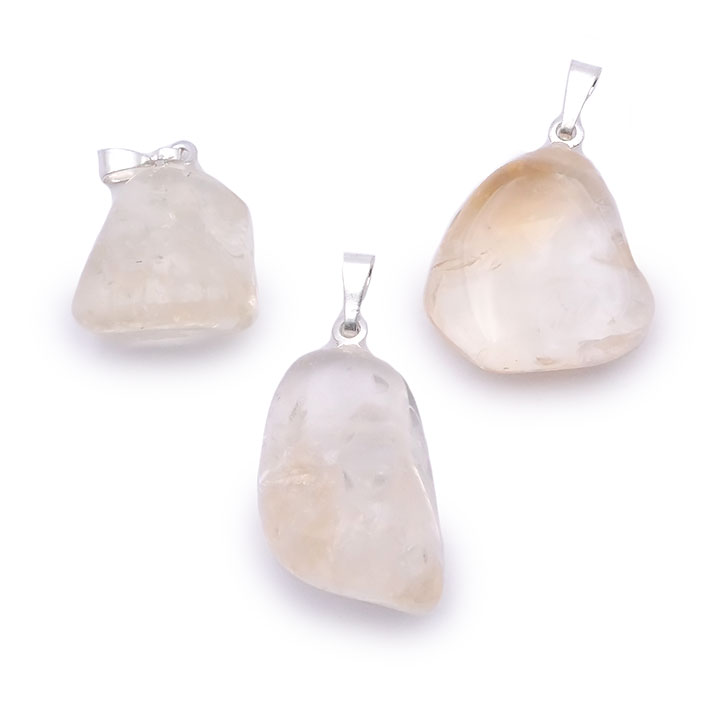
Find our Heat-Treated Citrine products
Heat-treated citrine
Contrary to popular belief, the name citrine comes from the Latin “citrus,” which does not mean “lemon” but the yellow citrus fruits of the citron tree. Moreover, citron tree comes from the Greek word “kédros,” meaning cedar.
This Latin root is found in the names lemon, lemon tree or lemongrass, but also in pumpkin or citraire (an old name for lemon balm producing a yellow infusion).
Long before being attributed to the citrine stone, the terms citrin and citrine were used as color adjectives. In very old medical works, writings refer to “citrine” ointments or “citrin” balms.
Heat-treated citrine or natural citrine?
Nowadays, there are two types of citrine available on the market: natural citrine and heat-treated citrine. Citrine is a quartz and belongs to the silicate group, more specifically tectosilicates, with a hexagonal crystal system. It has a hardness of 7/10 on the Mohs scale, indicating good chemical and mechanical resistance.
In summary, citrine is a stone from the same family as rock crystal and amethyst. The only difference is their respective color. It should be noted that rock crystal is pure silicon dioxide, whereas citrine contains iron inclusions, giving it its yellow color when it has been naturally heated by magma.
Thus, to obtain heat-treated citrine, amethyst is rapidly heated between 500 and 600°C. Its color under the effect of heat changes from purple to yellow. The iron and aluminum atoms are altered until they produce a bright yellow color.
It is exactly the same process for natural citrine, except that the heating process caused by magma takes place over decades. It is obvious that natural citrine has a much higher cost than citrine heated industrially.
Heat-treated citrine has a very yellow color, darker, less translucent, even opaque compared to natural citrine. Most citrines on the market are in fact heat-treated citrines. They contain inclusions, water pockets containing minerals trapped in the stone and growing inside it. In nature, these water pockets do not cause any fractures. But when heated industrially and rapidly, they create fractures or banding, leaving white traces and impurities.
The color of heat-treated citrine depends on the color of the amethyst used. The darker the color, the brighter yellow the heat-treated citrine will be. The shape of the crystals is also different; those of amethyst differ from those of natural citrine.
Heat-treated citrine deposits (amethyst)
Thus, the main deposits of heat-treated citrine are those of amethyst, namely in Brazil, Bolivia, Uruguay, Madagascar or Zambia.

The virtues of heat-treated citrine in lithotherapy
Its benefits on the mental level
Heat-treated citrine, with its dynamic color, has a stimulating effect and encourages self-confidence and self-esteem. It can be a great help for people suffering from insecurities and shyness. Indeed, it helps them develop their personality, assert themselves, and open up to others. It brings great serenity.
The tonic and positive energy released by this stone is very effective in cases of doubt, indecision and feelings of deep sadness. This energy is very useful during life changes. It promotes well-being and reduces stress. It spreads joie de vivre.
In addition, heat-treated citrine reduces tension in relationships with others, سواء in professional or family life. Its calming effect soothes anger and resentment, and fights anxiety and worries.
This stone is said to be a stone of prosperity. It therefore encourages success at work. It also improves concentration and inspiration and helps you bring out the best in yourself.
However, note that heat-treated citrine is said to be effective only temporarily, unlike natural citrine, which works over a longer period.
Its benefits on the physical level
Citrine restores vitality and motivation to the person wearing it. It pushes the person to go beyond themselves, especially in the fight against a constant state of fatigue or lack of energy.
It is very effective against stress and combats its harmful effects on the body. It transforms negative waves into positive waves and creates a feeling of fullness.
It promotes good circulation of bodily fluids while helping to energize the body.
Heat-treated citrine and the associated astrological signs
Heat-treated citrine has energizing, revitalizing virtues that apply to all zodiac natives. However, its effectiveness is enhanced for the following signs:

-
Gemini: symbol of communication, exchange and curiosity. This sign represents intelligence, studies and commerce. Wearing heat-treated citrine strengthens their confidence, especially professionally, and fights anxiety. This sign is very pleasant and spiritual, and company is often sought after. Always active and highly dynamic, it hates routine. It always needs to be intellectually stimulated. Behind its superficial and self-assured exterior, it lacks self-confidence. It loves movement and adores traveling. In love, it is seductive, charming and delightful. It multiplies conquests and can be very superficial. It is very afraid of commitment and of losing its freedom. But with time, it will calm down and can finally experience a beautiful love story;
-
Leo: symbol of power, royalty and generosity. This sign can show pride and vanity. It loves flattery, luxury and parties. Despite its superior air, it hides great fragility and needs to feel admired. Wearing heat-treated citrine gives it self-confidence and a lot of vitality and energy. It likes to be surrounded by others and to share with friends. It knows very early what it wants to do with its life and will use everything in its power to achieve it. By nature loyal and wholehearted, it cannot stand pettiness and meanness. In love, it is passionate, ardent and full of desire. It is idealistic and quickly seeks its soulmate in order to build a family;
-
Virgo: symbol of organization, precision and perfection. This sign is hardworking, perfectionist and self-conscious. Wearing heat-treated citrine helps it free itself from its insecurities and gain self-confidence. This sign is linked to medicine, health and dietetics. It is obsessed with order and cleanliness. It is said to be quick to criticize. However, it is very helpful and its logical mind works wonders. It tends to hide its anxiety behind a mask of coldness and indifference. In love, this sign is very reserved and very little sentimental. Very shy and often self-conscious, it prefers to stay alone. If it decides to get married, it is more for practical reasons than romantic ones!
Heat-treated citrine and the solar plexus chakra
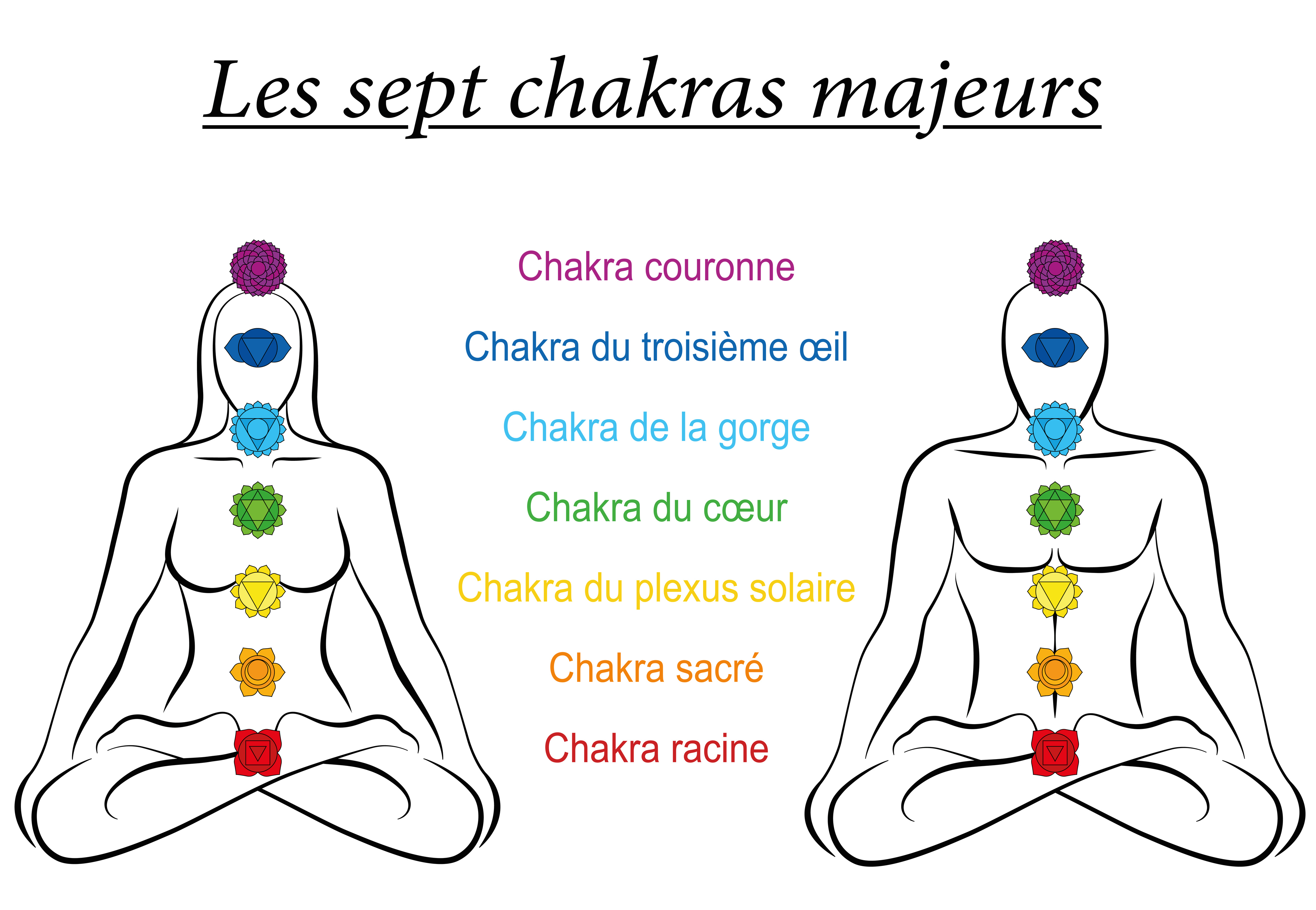
Heat-treated citrine acts particularly on the solar plexus chakra. This chakra is located in the abdomen, below the sternum. This chakra is often described as yellow in color and associated with a bright sun inside our body.
The association of heat-treated citrine with the solar plexus chakra brings energy and vitality while also triggering adrenaline. This chakra is said to govern the digestive system.
Care, cleansing and recharging of heat-treated citrine
As soon as a heat-treated citrine stone enters your life, it is essential to cleanse it and recharge it with positive energy. These operations should be repeated as maintenance once a month or after intensive use.
Immerse your stone in spring water for about fifteen minutes to cleanse it. You can use other cleansing methods such as smoke cleansing or a Tibetan singing bowl.
Recharge it in the morning sunlight or moonlight. Be careful not to expose it to the afternoon sun, as this could alter its color. For extra safety, place your heat-treated citrine on a quartz cluster or an amethyst druse for 24 hours.