 Français
 Deutsch
 English
 Español
 Italiano
Pink Tourmaline


Discover our Pink Tourmaline products
Stories and legends
The name tourmaline comes from “turmali” or “turamali”, which is actually a Sinhalese name given to this fabulous stone from Sri Lanka by Dutch explorers at the beginning of the 18th century.
In Sri Lanka, a legend says that tourmaline comes from the sky and that, as it descended to earth, it passed through a rainbow that gave it its colour variations. This explains the origin of its name, meaning “the stone of a thousand colours”.
In fact, tourmaline has been known for millennia. Traces of this stone date back to the 3rd century BC. In Greece, it was Alexander the Great (356-323 BC) who brought this stone back from his expeditions. However, because of its many colours, tourmaline was very often confused with other minerals.
As a result, there are very few legends or myths attached to this stone because it was identified late. However, some tourmalines have piezoelectric properties, meaning they carry an electric charge, negative at one pole and positive at the other. Tourmaline attracts particles to itself.
When the philosopher Theophrastus (-322 to -288) describes a stone with the ability to attract pieces of straw or wood, it is understood that he is speaking of tourmaline. Later, in the 18th century, Dutch explorers used tourmaline to clean their pipes, because the stone attracted ashes.
As an anecdote, in the 16th century a Spanish conquistador discovered a green tourmaline in Brazil, which he identified as an emerald. This discovery triggered a rush into the Brazilian regions in search of these famous emeralds. The mistake was corrected in the 19th century and the emeralds became tourmalines.
Often mistaken for precious stones, tourmalines can be found in many jewels, and even in the British Crown Jewels. One can also mention the Timur Ruby, a 352-carat jewel that was thought to be a ruby until 1851, or the Black Prince’s Ruby of 170 carats, which is actually a tourmaline.
Tourmaline is increasingly attracting interest from connoisseurs and collectors. Thus, the Chinese Empress Cixi (1861-1908) loved this stone so much that she began collecting it. She had sculptures, brooches, watch fobs, rings, etc. made for her. Today, she rests on a cushion of tourmalines.
Tourmaline comes in a wide range of shades. It can also be bicoloured or multicoloured. There is a great variety of tourmalines, in different colours, from opaque to transparent, with striated or hexagonal structures. It has a rhombohedral crystal system. It is an igneous and metamorphic rock that can come from hydrothermal deposits.
There are therefore several kinds of tourmaline with varied compositions such as magnesium, sodium and iron silicates, clay, fluorides and borosilicate. Tourmalines are actually an entire family of stones that share the same internal structure but differ in chemical composition and therefore in colour and appearance.
The main deposits are located in Brazil, Afghanistan, Australia, Brazil, Russia, Thailand, Burma, Madagascar, India and the United States.
Pink tourmaline / rubellite pink gemstone tourmaline
The tourmaline family includes many varieties identified by a specific name or by colour. Pink tourmaline is also called “rubellite” because of its strong resemblance to ruby. The name rubellite comes from the Latin “rubellus”, meaning “reddish”. Incidentally, in Russia in the 17th century, a crown was adorned with pink tourmalines that had been mistaken for rubies.
Belonging to the tourmaline family, pink tourmaline or rubellite is made up of complex borosilicate silicates, with iron, alkalis and magnesium. It also contains a high copper and manganese content, which gives it its beautiful pink colour. Pink tourmaline can be transparent, translucent or even opaque. It should be noted that its colour can change depending on the viewing angle of the stone.
Sometimes rubellite has a colour tending toward red, hence its confusion with ruby. Among the pink tones, there are dravite (light mahogany) and siberite (lilac pink to blue-violet). Pink tourmaline has a hardness of 7 to 7.5 on the Mohs scale. By comparison, diamond has a hardness of 10, the highest on the same scale. This hardness is particularly appreciated by jewellers in the making of their jewellery.
Pink tourmaline or rubellite was relatively affordable. However, demand having increased considerably, so have prices!
The main deposits are located in Namibia, etc.

The benefits of tourmaline in lithotherapy
Its benefits on the psychological level
Pink tourmaline is closely linked to feelings of love and tenderness. It emits vibrations that help restore and protect psychological well-being. It encourages introspection and reconnection with one’s inner self. In this way, it helps identify the nature of buried traumas, often linked to childhood and a lack of love. The person can then work through these traumas and move forward. They will be able to achieve the goals they have set for themselves.
This stone restores self-esteem and confidence. It brings serenity, harmony and inner peace. It fosters trust in others and can thus help develop new relationships without suspicion. It shows compassion and empathy. The person sincerely seeks to help others in need. Then this fabulous stone teaches the person to love themselves as they are.
Pink tourmaline is known for soothing sorrow and grief. It helps overcome life’s difficulties and negative thoughts. It frees its wearer from anxiety, anguish and chronic shyness. It also helps them become aware of their own qualities. It brings a sense of security when the wearer feels vulnerable. It encourages conflict resolution, whatever the nature of the conflict.
Its benefits on the physical level
Pink tourmaline brings serenity and helps its wearer effectively fight stress and its effects on the body.
This mineral also promotes restorative sleep, giving its wearer vitality and energy. They regain the desire to resume physical activity. They are overflowing with invigorating energy.
Pink tourmaline is known for helping its wearer free themselves from certain addictions. It gives them the strength to resist temptation.
At the same time, in intimate relationships, it stimulates the flame of passion. It helps with libido problems, for both women and men. It is the stone of love.
Pink tourmaline and the associated zodiac signs
Pink tourmaline gives off positive waves that open the way to love and tenderness. It spreads feelings of peace and harmony across all zodiac signs. Sometimes certain stones develop greater affinities with certain astrological signs. This is particularly the case for the following zodiac signs:

- Aries: a symbol of action, enthusiasm and dynamism. This sign represents drive, ardour and energy. Wearing pink tourmaline strengthens its confidence, self-esteem and trust in others. This sign has a great deal of charisma and natural leadership. It is naturally listened to and followed. It loves confrontation and combat. It always wants to be first in everything it does. It is sometimes immature and extravagant with money. It needs professional success to maintain its lifestyle. It can sometimes be too frank and may be hurtful. It seriously lacks diplomacy. It has a lot of instinct, and a warm, friendly personality. Its company is often sought after. It never gives up and always gets back up, even after difficulty. It has a great sense of humour and sometimes irony. It throws itself fully into projects that it will not necessarily see through to completion. In love, it is passionate, fiery and can fall quickly. However, it seeks all kinds of experiences and will multiply conquests. With age and maturity, it becomes an excellent partner and can finally start a family ;
- Libra: a symbol of justice, peace and harmony. This sign represents unions, refinement and elegance. Wearing pink tourmaline develops its sociable side, allowing it to discover new relationships without suspicion and to show compassion and empathy. This sign’s company is highly sought after. It is known for its kindness and altruism. It hates solitude and conflict. It is an excellent mediator. The problem is that this sign struggles to make decisions. It always seeks to satisfy all parties. It likes to move in social circles. It often has artistic talents, especially in dance. It loves being watched and admired. The opinions of others matter greatly to it. This sign dreams of a more egalitarian and fairer world. Under its pleasant and agreeable exterior, it shows great strength and determination. It abhors vulgarity and dirt. In love, this sign is romantic and sentimental. It stands for harmony and peace. It will move very quickly towards marriage. It will do everything to make its relationship work. It possesses great sensuality, a vital need to please and to be admired ;
- Scorpio: a symbol of sexuality, passion and desire. This sign represents the end of things, mystery and secrecy. Wearing pink tourmaline helps it identify the nature of buried traumas, especially those caused by a lack of love, and helps it overcome them. This sign is extremely perceptive and quickly manages to read the person it is talking to, which sometimes allows it to go as far as manipulation. It is fascinated by the forbidden and by excess. However, this sign is loyal and wholehearted. But beware, because it will never forgive betrayal and its revenge will be terrible. It can quickly become violent, resentful and vengeful. It has a taste for success and proves formidable. It will stop at nothing to come first. Very difficult to read, it is secretive, manipulative and sometimes dishonest. Determined and strong-willed, it sees its projects through to the end. It is capable of hard work and gives everything it has. In love, it is very difficult to read. It is passionate, hypnotic and possessive. It often has complicated relationships, seeking to control the other and merge with them. It needs to experience various sexual experiences, even going as far as pornography. Then it calms down and becomes a loyal and protective partner.
Pink tourmaline and the chakras
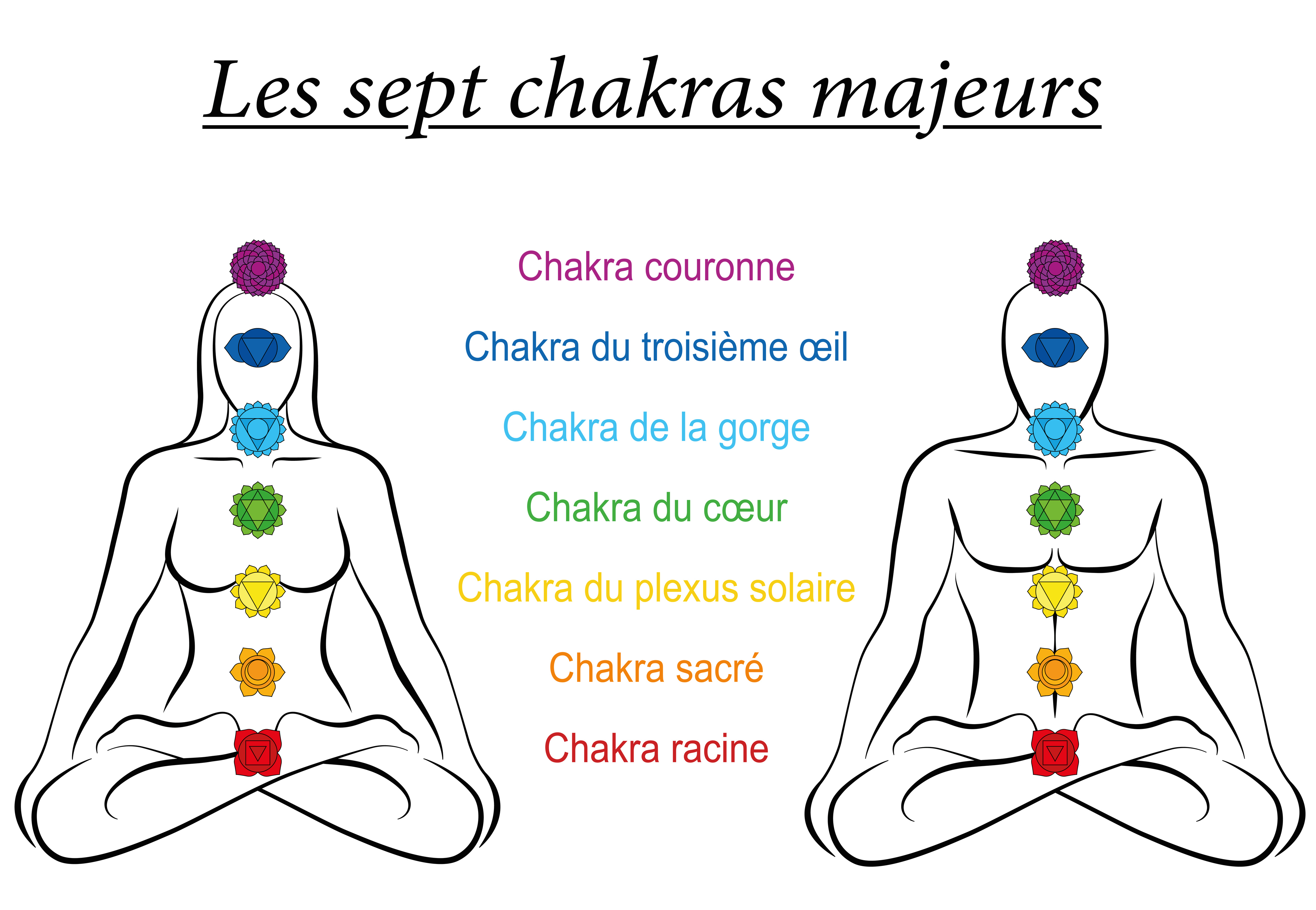
Pink tourmaline helps balance the heart chakra. This chakra is located at the sternum in the front and between the shoulder blades at the back. When the heart chakra is balanced and harmonised, it creates a wonderful openness of mind and self-acceptance, as well as acceptance of others. The person shows a great deal of empathy and compassion. They have the will to help others. They possess a beautiful joie de vivre that is highly contagious.
A heart chakra that is imbalanced and too open causes two types of behaviour. Indeed, the person may show excessive devotion in order to receive love and recognition. Or the person develops a narcissistic and egocentric character. They criticise everything, become envious and demanding.
A heart chakra that is imbalanced and blocked prevents the person from opening up to others. They are angry, very selfish and intolerant. They cannot accept themselves and shut themselves off from any form of love. They cannot forgive and are very afraid of being rejected.
A heart chakra that is imbalanced and underactive makes the person impervious to any form of love. They prefer to devote themselves to many intellectual or physical activities. They end up persuading themselves that they do not need romantic relationships.
Care, cleansing and recharging of pink tourmaline
From the moment it is extracted until it reaches your home, your pink tourmaline could not be cleansed or recharged using natural elements such as sun, earth and water. In addition, it has been handled many times and has inevitably come into contact with various energies, negative or positive.
As soon as your stone arrives in your home, it is essential to cleanse it and then recharge it. The following operations should be repeated as maintenance at least once a month or after use in lithotherapy.
Immerse your pink tourmaline in a glass of spring water for 2 hours. Dry it with a soft cloth. For a lighter cleansing, opt for white sage smoke cleansing or a Tibetan singing bowl.
Recharge your stone in the afternoon sunlight for 2 hours. You can also place it in an amethyst geode or on a quartz cluster for 24 hours.