 Français
 Deutsch
 English
 Español
 Italiano
Red Aventurine
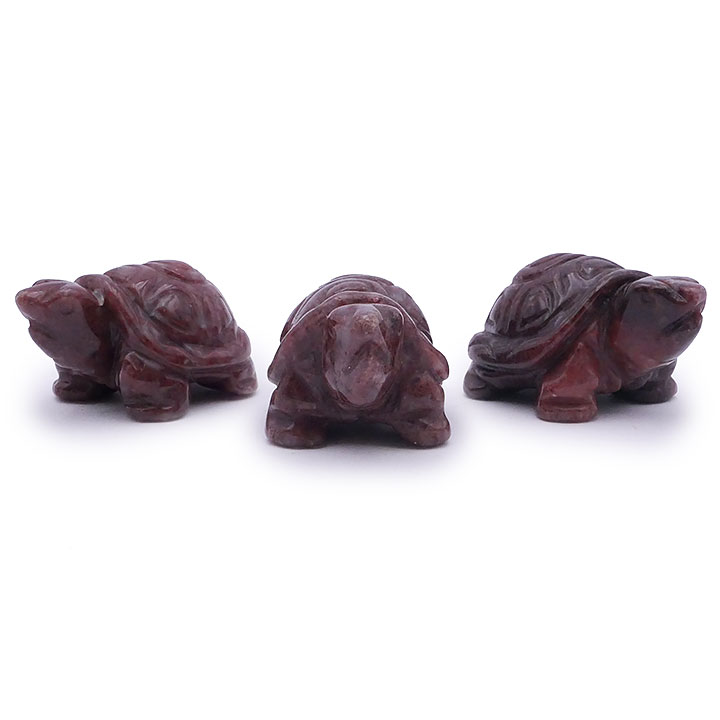
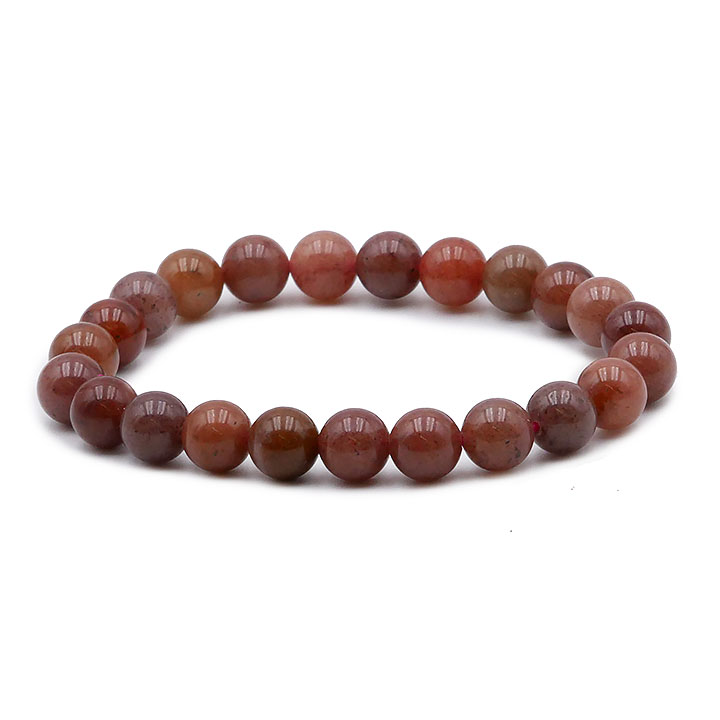
Discover all our Red Aventurine stones
The properties of red aventurine
Like rock crystal, aventurine is a microcrystalline variety of quartz, with different colours due to its mica inclusions. Mica looks like grains of sand in different shades. Green aventurine is the best known; it contains fuchsite inclusions. Red aventurine, on the other hand, contains hematite inclusions, yellow aventurine contains pyrite inclusions, and blue aventurine contains dumortierite inclusions.
It is a natural mineral stone, most often translucent. However, a large amount of minerals can make it opaque. This stone formed in igneous rocks, especially in pegmatites (magnificent rocks with impressive crystals) or in hydrothermal veins.
Be careful when buying this stone; it is essential to check that it is indeed the stone and not man-made glass. The latter has a much shinier appearance than the stone.
Its history
The history of this stone tells us that this mineral owes its name to aventurine glass, not the other way around. Indeed, in the 17th century, glassmakers in Venice used techniques in glass production that caused fires. They then decided to move to the island of Murano, which also allowed them to jealously guard the secrets of their glassmaking. One day, a glassmaker accidentally dropped copper filings into molten glass. The result was astonishing and created aventurine, or Goldstone. This glittering glass became the specialty of Murano glassmakers. Soon, the resemblance to the natural stone was noticed, and it was given the name aventurine, from the Italian “a ventura,” meaning by chance.
At the end of the 17th century, Madame de Maintenon, governess to the children of Louis XIV before marrying him, owned many figurines and pieces of aventurine jewellery.
It was later discovered that aventurine had already been known for thousands of years. The Tibetans used it for the eyes of their statues and attributed powers to it against eyesight problems. The Celts saw this stone as a symbol of the knowledge of the spirit. For the Chinese, it was an imperial stone. In addition, aventurine tools dating back to prehistory have been found in Ethiopia. Yet it is strange that this stone does not appear in the various mythologies like amethyst, for example.
Around 1830, Russian craftsmen carved an impressive basin in red aventurine from a peak in the Urals. This masterful work was made over several years; it measures 2.46 m wide and 1.46 m high. It is on display in Saint Petersburg in the sublime Winter Palace.
We can also admire an impressive creation in Paris, beneath the dome of Les Invalides. In fact, Napoleon I’s tomb, which took 20 years to make, is made of red aventurine.
Today, aventurine is mainly used in jewellery making, especially cameos. It is a stone that remains very affordable due to its abundance. Red aventurine is also used to make decorative objects, stones for landscaping, and for aquariums or monuments.
Where does red aventurine come from?
The main deposits are found in Brazil, India, China, the United States, Germany and even France.

Benefits of red aventurine
Psychological virtues
Often less well known than green aventurine, red aventurine nevertheless has many qualities in lithotherapy.
This stone is connected to the Earth and brings strength, vitality and warmth to our bodies. The distinctive red of this stone restores energy and inspiration. It provides motivation to help start or complete projects. It reconnects its wearer to their inner resources during times of fatigue.
Its glittering appearance due to hematite inclusions is associated with the radiance of vitality. It is a stone that helps reactivate us during periods of discouragement.
Thus, red aventurine brings success and prosperity in the professional sphere, encouraging creativity and imagination.
This stone provides determination and perseverance in the most complicated times of life. It gives strength and confidence while remaining pragmatic.
It restores a sense of humour, reveals mistakes, and helps overcome them so you can move on with confidence.
Red aventurine calls for excitement and action. It brings enthusiasm; it is the colour of passion, energy and life. It is also the colour of fire and blood. It restores stability on the emotional and mental levels. Above all, it is an anti-stress stone.
Physical properties
Red aventurine helps bodily fluids circulate properly and supports the healthy functioning of the heart chakra.
It is beneficial in combating excess anger. It is also said to calm children who tend to fidget too much and have a nervous temperament.
It promotes sleep, makes it easier to fall asleep and provides restorative rest.
Red aventurine and its two astrological signs
Red aventurine is beneficial for all zodiac signs, but its power is especially strong for people born under the following signs: 
-
Virgo: a symbol of organisation, sorting and method. It is a sign that shows great logic and is very perfectionist. By nature anxious, it is very hardworking and wearing red aventurine helps it achieve its projects. This sign is obsessed with order; it is very meticulous. It likes to put its talents at the service of others. Be careful, because it is very quick to criticise, but remains very modest. It suffers from a major lack of self-confidence. Red aventurine restores that confidence. In love, it is very reserved and not sentimental. It often prefers solitude. When it gets married, it is more out of interest than love.
-
Libra: a symbol of justice, balance and peace. This sign likes to live in harmony with those around them. It is often highly sociable. It hates solitude, because it always needs to be loved and admired. It has a taste for beauty and refinement, and likes to be fashionable. On the other hand, it is known for its indecision, because it finds it very hard to choose. It is above all a pacifist and avoids conflict. People enjoy its company; it is very kind and has a gift for making connections. In love, it is very romantic and seeks harmony and peace. It hates being alone and tends to marry very young. It needs to be loved and admired.
The root chakra is linked to red aventurine
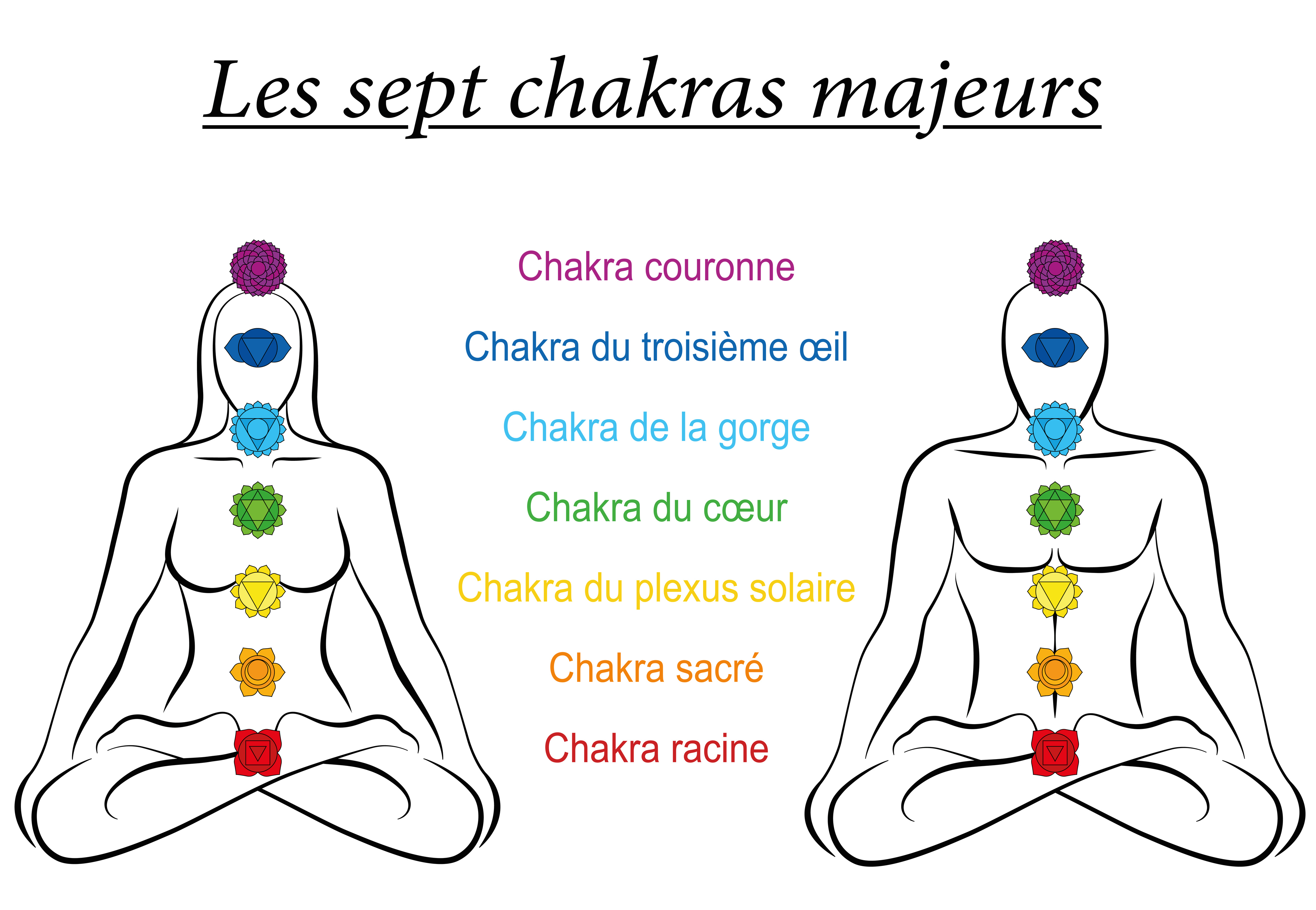
Red aventurine activates the root chakra, located at the base of the spine. When it is out of balance, a kind of lethargy sets in, causing a lack of enthusiasm. Red crystals therefore balance the chakra and allow the body to regain vitality and energy.
Care, cleansing and recharging red aventurine
When you become the owner of red aventurine, make sure it is cleared of the negative energies it may have accumulated during its journey. The following operations should be carried out at least once a month or after intensive use.
Rinse it under running water for a few minutes. You can also cleanse it using incense or a Tibetan singing bowl.
Recharge it in moonlight, but not during a full moon, as this could alter its colour. Ideally, place it on a quartz cluster or an amethyst druse for 24 hours.